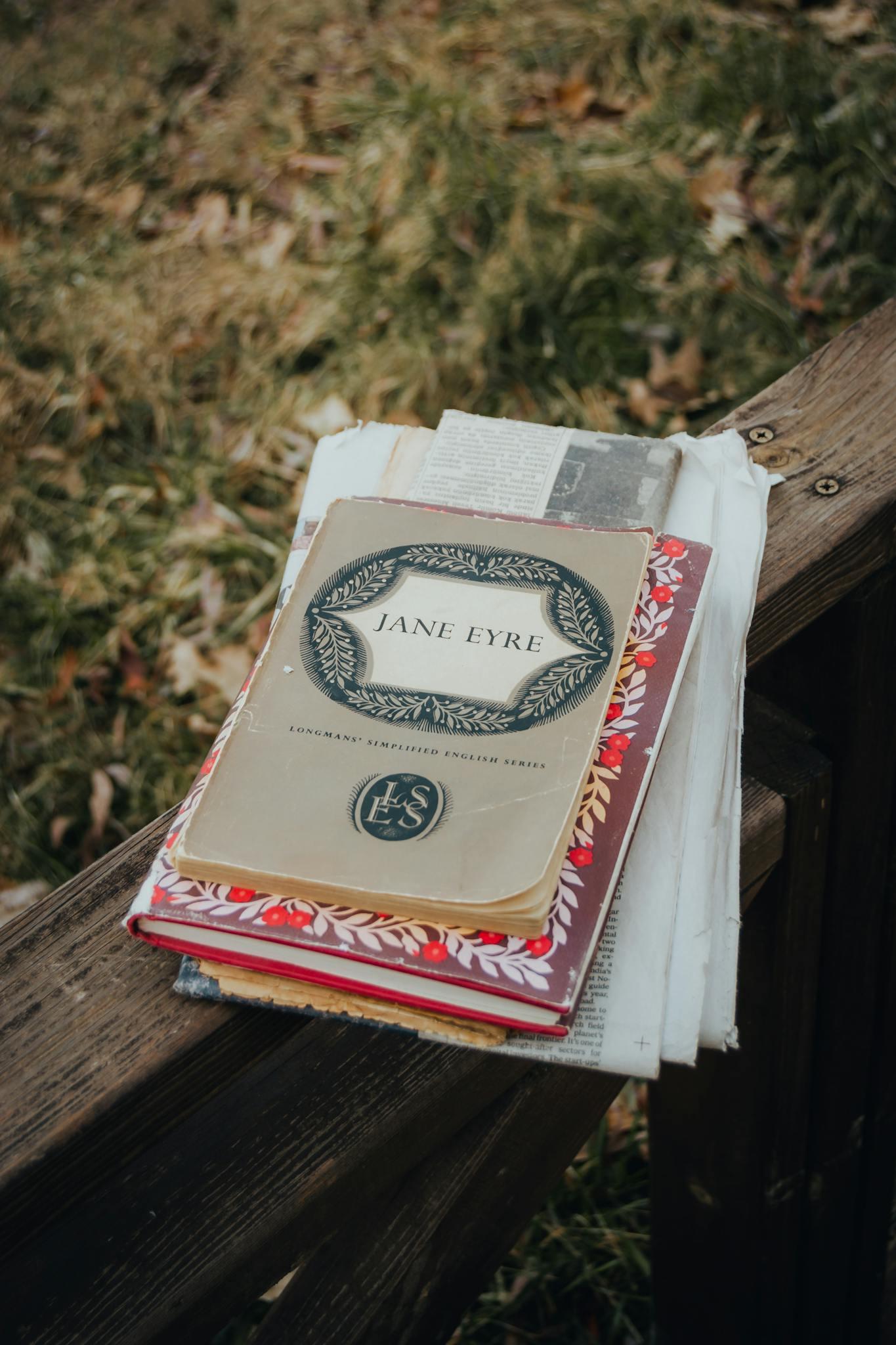
The Impossible Mathematics of Deserving Love
There's a moment near the end of Jane Eyre that I can't stop thinking about. Jane has returned to Rochester, blind, maimed, humbled, and she's describing their life together, insisting they're equals now. She says it with such conviction. Such relief. And all I can think is: why did he have to lose everything before she could let herself have him?
I read it first when I was too young to understand it, and I thought it was romantic. The governess and her difficult, passionate employer. True love conquering all obstacles. A happy ending earned through suffering. Now, reading it again, I see something else entirely. Something about hunger that doesn't know it's hunger. Something about the way we teach certain people that wanting anything at all is a moral failing.
Jane spends the first quarter of the novel learning to make herself small. At Gateshead, with her aunt and cousins, she's constantly reminded that she's a charity case, a burden, something to be tolerated rather than loved. When she fights back when she tells her aunt exactly what she thinks of her, it feels like a revolution. But then Lowood happens, and she learns a different lesson: how to endure. How to survive by wanting less. How to call deprivation virtue.
And then Rochester happens.
What gets me about their relationship, what I think Brontë understood on some deep, probably uncomfortable level, is how desperately Jane wants him. Not in some pure, spiritual way. She wants him physically, emotionally, completely. She's starving for connection and he offers it to her, and she takes it with both hands even though she knows, she must know, that something isn't right. The power dynamic alone should terrify her. He's her employer. He's twice her age. He plays psychological games with her, pretending to court someone else just to see her reaction.
But here's what I keep coming back to: Jane doesn't care. Or she does care, but she wants him anyway, and maybe that's the more honest thing. Maybe Brontë is showing us what it looks like when someone who has been denied everything suddenly gets offered something, anything. You don't evaluate it carefully. You don't maintain your boundaries. You just take it because you don't know when you'll be offered anything again.
The proposal scene always wrecks me. Jane crying, trying to leave, and Rochester stopping her. "Do you think, because I am poor, obscure, plain, and little, I am soulless and heartless?" It's the cry of every person who has ever felt invisible demanding to be seen. And it works. It works because Rochester does see her. But I wonder now if being seen is enough. If it's healthy to be so grateful for basic recognition that you overlook everything else.
Then comes the wedding that isn't. The madwoman in the attic. And here's where the novel gets complicated in ways I'm still trying to understand.
Bertha Mason, Rochester's first wife, locked away, mad, violent, is the dark mirror of everything Jane could become. Another woman Rochester claimed to love. Another woman who became inconvenient. The novel wants us to see Bertha as too far gone, too damaged, too Other to deserve consideration. But what I see is a woman who went mad in captivity, whose husband tells only his version of her story, who gets called a monster so he can play the victim.
Jane runs. She leaves Rochester, and every time I read it, I'm torn between admiration and frustration. Because yes, she's maintaining her integrity. She's refusing to be his mistress. She's choosing self-respect over desire. But also she's starving herself again. She's returning to that Lowood lesson: wanting things is dangerous, denial is virtue. She nearly dies from it. Literally wanders the moors and almost perishes because she won't let herself have what she wants if it violates some moral principle she's internalized.
The St. John section is where I start to lose patience with the novel, and maybe with Jane. St. John Rivers offers her a different kind of cage, marriage without love, duty without desire, a life of purpose that requires her to kill everything vital in herself. And she almost takes it. Almost convinces herself that this is what she deserves, what she should want. A useful life rather than a passionate one.
It takes Rochester's literal voice crying out to her across the distance, psychic connection or coincidence or narrative convenience, take your pick, for her to finally choose desire over duty. And even then, she can only return to him once he's been punished. Once he's lost his wife (conveniently dead), his sight, his hand, his home. Once the power dynamic has shifted enough that she can come to him as an equal, or maybe even as his savior.
This is the part that bothers me. The part I'm still trying to understand. Jane gets her happy ending, but only after Rochester has been sufficiently destroyed. He has to be broken before she can have him. He has to need her before she'll let herself need him. Is that love? Or is that just another version of the same lesson she learned at Lowood, that you can only have things if you've suffered enough for them first?
I think about the ending, where Jane tells us she's been married for ten years and it's blissful. She and Rochester are equals now. Partners. He regains some of his sight. They have children. It should feel triumphant, and maybe it does, but there's something that nags at me. She had to wait for him to be maimed before she could allow herself happiness. She had to prove she wasn't after his money or his status by coming back when he had neither. The calculus of deserving never quite goes away.
What I'm realizing is that the story isn't really about whether Jane gets Rochester. It's about whether she can give herself permission to want him at all. The entire novel is her negotiating with her own desire, trying to figure out how much she's allowed to have. And the answer, apparently, is: everything, but only after you've proven you don't need it. Only after you've nearly destroyed yourself through denial. Only after the object of your desire has been sufficiently punished so the universe knows you're not getting away with anything.
This is what we do to women who want things. We make them prove they deserve it. We make them choose between desire and dignity. We tell them that loving someone is fine as long as they're willing to walk away from it, starve for it, almost die for it first. We call this self-respect. We call this morality. We call this a happy ending.
And maybe it is. Maybe Jane is genuinely happy in those final pages. Maybe she's earned her happiness through suffering, the way the novel seems to think she should. Maybe that's the only way people like her, poor, plain, powerless, are allowed to have things in this world. By proving they can live without them first.
But I can't stop thinking about Bertha. About how she's the woman who wanted too much, demanded too much, who couldn't or wouldn't make herself small enough to fit into Rochester's life. About how she had to die for Jane to get her ending. About how the novel needs us to see her as monstrous so we don't ask too many questions about who locked her up there in the first place.
I think Brontë was trying to write about female dignity and independence. About a woman who refuses to compromise her integrity even for love. And she did write that. But she also wrote about hunger. About how people who have been starved will do almost anything for a meal. About how we convince ourselves that our deprivation is virtue because the alternative is admitting how much we've been denied.
Jane Eyre is a love story, yes. But it's also a story about a woman trying to figure out the impossible mathematics of deserving. Trying to calculate exactly how much suffering equals enough. How much self-denial purchases the right to want something. How much you have to diminish yourself before the universe will let you have what you need.
I don't have an answer. I'm not sure Brontë did either. What I do know is that this novel understands something true and uncomfortable about what it means to want things when the world has taught you that people like you don't get to want. That sometimes getting what you desire requires waiting until it's been sufficiently damaged that accepting it feels like charity rather than greed.
Jane gets her happy ending. I believe she's happy. But I can't shake the feeling that she paid too much for it, and that we've been teaching women to pay that price ever since.
Maybe I'm being unfair. Maybe self-respect really does require that kind of sacrifice. Maybe you can't have authentic love without proving you're willing to walk away from it.
Or maybe we just tell ourselves that because the alternative, that you could want something and take it and deserve it without nearly destroying yourself first, feels too dangerous. Too greedy. Too much like the madwoman in the attic, demanding more than she's supposed to have.
Post a comment